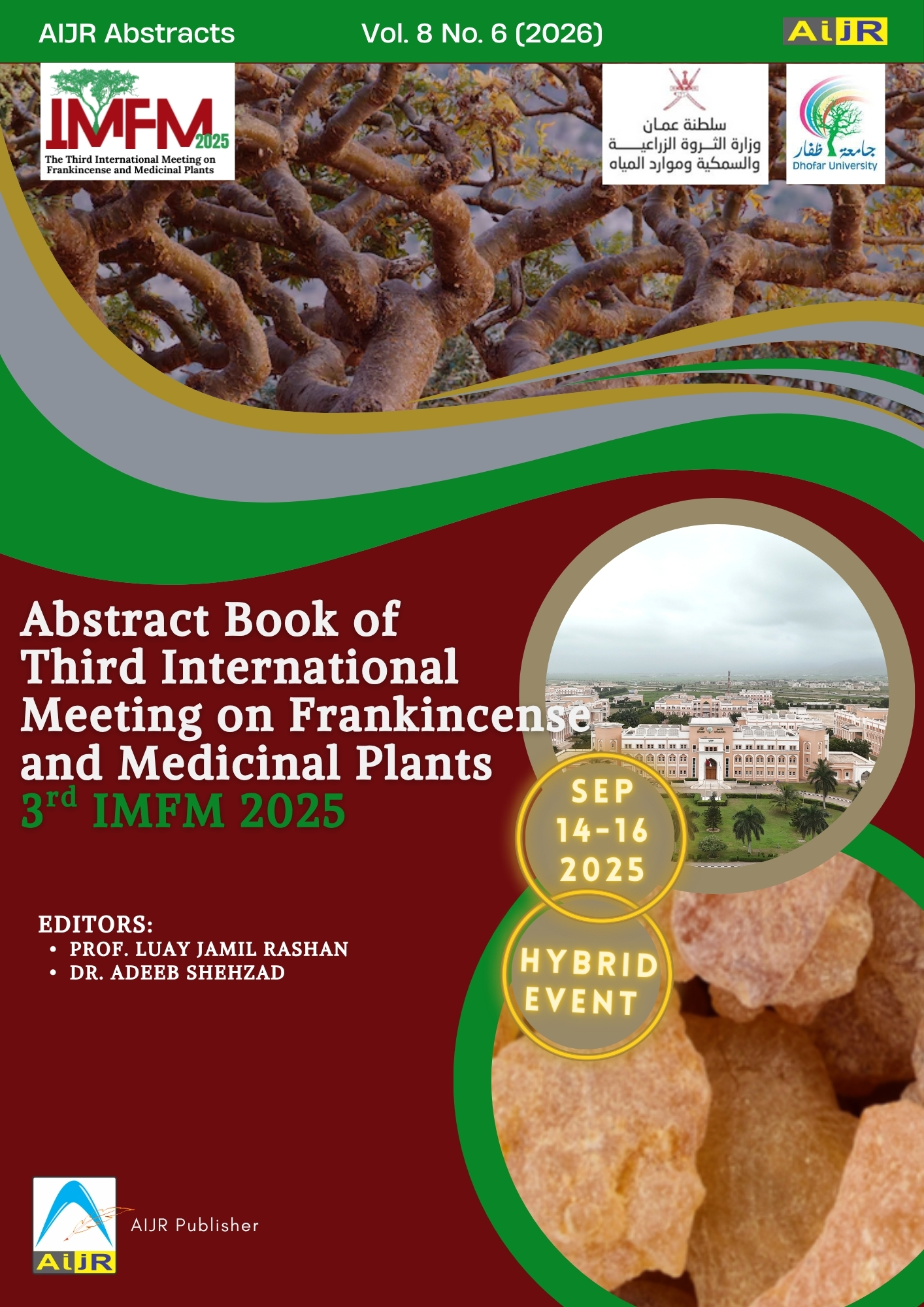
The importance of the frankincense tree and its environmental and economic benefits
Abstract
The frankincense tree is considered one of the world’s most valuable trees, especially in the Sultanate of Oman, and more specifically in the Dhofar Governorate. This tree holds significant historical importance, as its resin was exported to ancient civilizations such as the Pharaohs, Phoenicians, Romans, and Persians. These civilizations used frankincense for medicinal purposes, and it also held religious value—it was burned as incense in temples and palaces and was considered sacred by some cultures and religious figures. Frankincense has played a global economic role through its medicinal, aromatic, and spiritual benefits, and it has greatly enriched Dhofar economically, culturally, and socially. The total area of frankincense-growing land is estimated to exceed 10,000 hectares (though no comprehensive surveys have been conducted to confirm the exact size of this sector). Due to its historical, cultural, and economic significance—and its emerging value in the medical, perfumery, and cosmetics industries—frankincense is gaining renewed attention today. The frankincense tree belongs to the Burseraceae family, which includes around 550 species. Among these are shrubs like Awoqar, Shayquf, Akeebut, Aqreet, and Mughur (or Mur), also found in Dhofar. There are about 40 known species of Boswellia worldwide, three of which are not yet officially classified. The frankincense tree generally grows to a height between 3 and 7 meters. However, in certain valleys and ravines such as Wadi Qayfar (Anzur) and Wadi Hilah east of Haluf, the trees can reach up to 10 meters in height. Frankincense trees are typically found in small clusters or as isolated individuals. In most cases, the trunk branches out into multiple stems above ground, though it can occasionally grow with a single trunk, which is relatively rare.
Downloads
Published
Issue
Section
License

This work is licensed under a Creative Commons Attribution-NonCommercial 4.0 International License.
Click here for more information on Copyright policy
Click here for more information on Licensing policy